Skip to content
24/7 Emergency drainage response 0161 282 8080
Manchester Blocked Drain Co
Manchester emergency drainage team

Local Drainage Services in Manchester

Local engineers available across Manchester and surrounding areas for urgent and planned drainage work.

  • Fast local response across Manchester
  • Fixed prices agreed before work starts
  • No call-out fee
  • 24/7 emergency availability

Trusted by local homeowners, landlords, and businesses

Same-day slots Fully insured Modern equipment Clear reports

Fast callback

Request your free quote

Tell us what is blocked and we will confirm the next available engineer.

24/7 Emergency Response
Fixed Pricing
Local Manchester Engineers
No Call-Out Fee

Local response in Manchester

We attend homes and businesses across Manchester with rapid callout availability and clear fixed pricing.

  • Typical urgent response target: same day
  • Common callouts: blocked sinks, toilets, and outside drains
  • Coverage includes nearby neighbourhoods and links roads

Where we cover in Manchester

Drainage in Manchester

Manchester's drainage infrastructure is one of the oldest and most extensive in England, with the city's first purpose-built sewers laid during the 1840s and 1850s under the direction of city engineer John Frederick La Trobe Bateman. The Victorian combined sewer network — carrying both foul water and surface water in the same pipes — still forms the backbone of the system serving the inner city and the dense residential neighbourhoods that radiate outward from the city centre. Much of this infrastructure is now 130 to 170 years old, and the combination of age, ground movement, and demand that far exceeds original design capacity creates regular maintenance requirements across the city.

The inner residential areas — Hulme, Moss Side, Ardwick, Longsight, and Rusholme — are characterised by dense Victorian and Edwardian terraced housing built for the mill workers, factory hands, and trades people who drove Manchester's industrial expansion. Clay pipe drainage beneath these streets is typically 100 to 140 years old, running in long terrace rows where a blockage affecting one property quickly impacts neighbours on the same shared run. Fat and grease accumulation from kitchen waste is the single most common cause of blockages in these areas, accelerated by the density of households sharing relatively small-bore drainage.

The River Medlock flows through the city from east to west, passing through Ardwick and beneath the city centre before joining the River Irwell near Castlefield. Properties in the Medlock valley and along low-lying stretches of the city can experience drainage backup when the river rises during sustained heavy rainfall, as the combined sewer system struggles to discharge against the elevated river level. The River Irwell, forming the western boundary between Manchester and Salford, similarly influences drainage discharge conditions for properties in Deansgate, Castlefield, and the waterfront development areas.

Manchester's ongoing city centre regeneration — from the original Castlefield restoration to the Northern Quarter, Ancoats, and NOMA developments — has brought contemporary drainage infrastructure into areas that previously relied entirely on Victorian systems. These new drainage installations typically connect to upgraded combined sewer mains, but transition zones where old meets new can create challenges. Properties in partially regenerated areas may have modern drainage connections discharging into pipes that predate the First World War.

The suburban south of Manchester — Didsbury, Chorlton, Withington, and Fallowfield — features predominantly Edwardian and 1920s to 1930s residential housing. These areas have clay pipe drainage that is slightly younger than the inner city stock, typically 80 to 120 years old, but tree root intrusion from the mature street trees and well-established private gardens is the characteristic challenge. The River Mersey runs along Manchester's southern boundary, and properties near the river at Didsbury and Chorlton should be aware of flood risk during sustained Pennine rainfall events.

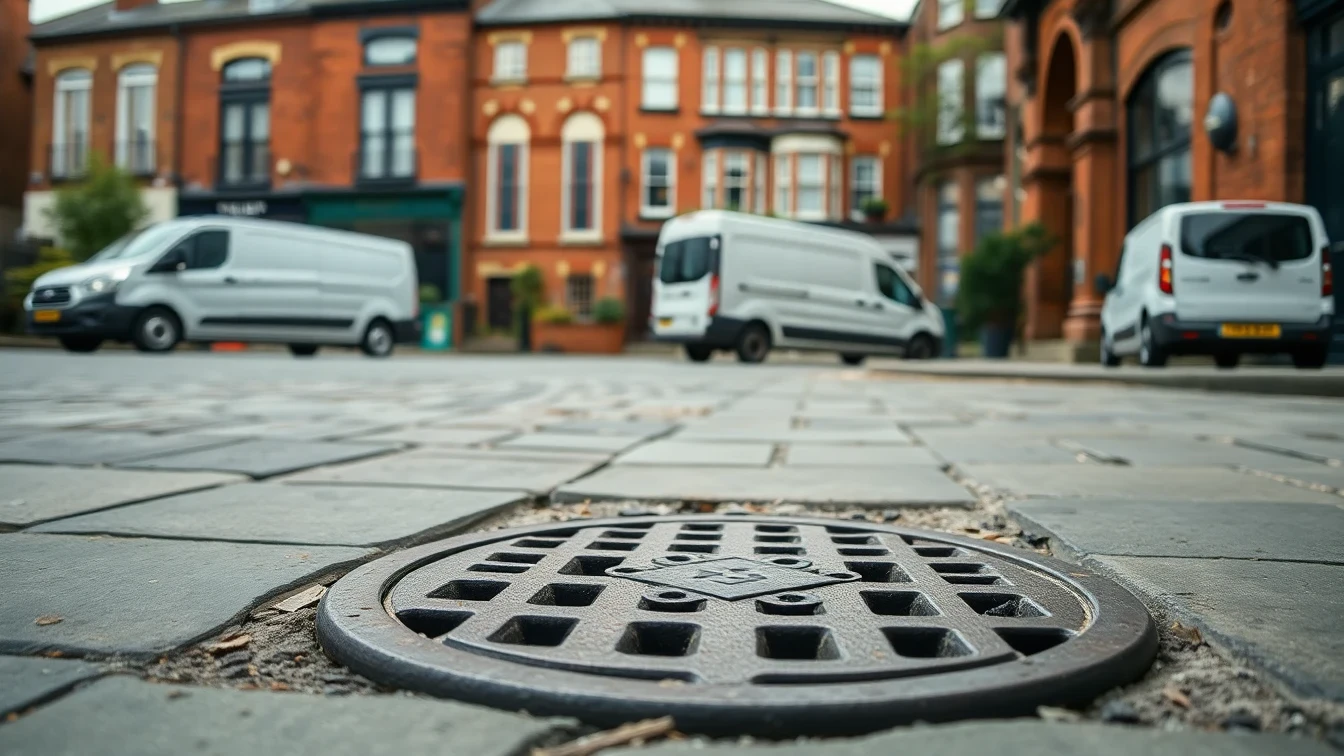
Areas and landmarks we serve near Manchester

Manchester City CentreNorthern QuarterAncoatsDeansgateCastlefieldSpinningfieldsPiccadilly GardensOxford RoadHulmeMoss SideRusholmeLevenshulmeGortonWythenshaweDidsburyChorltonWithingtonFallowfieldLongsightArdwick

Recent case study in Manchester

Call-out to a Victorian terrace in Longsight: the homeowner reported water backing up through the ground-floor toilet during heavy rain, with a persistent sewage smell in the rear yard between events. Our CCTV survey revealed the main clay drain had multiple joint gaps across a 15-metre section beneath the rear yard, with fat and debris accumulated in sagged sections where the pipe had settled unevenly over the years. Root intrusion from a mature sycamore in the adjacent garden had colonised the worst joint gap, reducing flow capacity by approximately 35%. We cleared the roots and accumulated deposits with high-pressure jetting, then installed structural pipe relining throughout the affected section. Result: drainage fully restored, yard odour eliminated, and the pipe joints sealed against further root entry. Tip: Manchester inner-city terraces with shared rear access lanes often have drainage running beneath them that serves multiple properties — if your neighbour has drainage issues at the same time as you, a single CCTV survey covering the shared section is far more efficient than investigating separately.

Manchester drainage FAQs

Why do Manchester's inner-city terraced properties have recurring drain blockages?

Victorian and Edwardian clay drainage in areas like Moss Side, Longsight, and Ardwick was designed for much lower household water use than today. After 100-plus years, pipe joints have deteriorated, allowing fat and debris to accumulate faster than in sound pipes. Long terrace rows where multiple properties share the same underground run mean blockages spread quickly. Professional jetting clears the build-up; structural pipe relining seals deteriorated joints from the inside and extends service life significantly.

Does the River Medlock or River Irwell affect drainage in Manchester city centre?

Yes. Both rivers run through or alongside the city centre and during heavy rainfall their levels can rise, reducing the combined sewer system's ability to discharge freely. Properties in lower-lying areas near Castlefield, Deansgate, and along the Medlock valley are most at risk of drainage backup during these events. A non-return valve on your main drain connection provides protection against sewage backup when the river is running high — a modest cost compared to the damage a single flood event causes.

What drainage issues are common in Manchester's Didsbury and Chorlton areas?

The Edwardian and interwar housing stock in Didsbury, Chorlton, and Withington features clay pipe drainage from roughly 1900 to 1935 — now 90 to 120 years old. The mature gardens and established street trees characteristic of these sought-after neighbourhoods are the main drainage threat: root systems actively seek out aging clay pipe joints, and once inside can colonise a pipe rapidly. Regular CCTV surveys every two to three years catch root intrusion before it causes a full blockage, and pipe relining seals joints permanently against re-entry.

My Manchester city centre apartment building has recurring blocked drains — whose responsibility is it?

In multi-occupancy buildings, responsibility depends on where in the drainage system the blockage occurs. Shared waste stacks and underground drains serving multiple units are typically the building owner or management company's responsibility. Drains serving only your individual flat are yours. A CCTV survey traces the entire run from your property to the public sewer connection, clearly identifying blockage location and therefore responsibility. We liaise with building managers and United Utilities where needed.

Call now Get quote