Skip to content
24/7 Emergency drainage response Get a Free Quote
Manchester Blocked Drain Co
Saniflo & Macerator Repair in Manchester
Manchester emergency drainage team

Saniflo & Macerator Repair in Manchester

Expert repair and servicing of Saniflo macerators, WC units, and grey-water pumps throughout Manchester, Salford, and surrounding areas. Common in flat conversions, basement bathrooms, and city-centre apartments, macerators fail when non-flushable items cause blockages or the membrane degrades. We diagnose faults, replace seals and blades, clear blockages, and advise on correct use to prevent repeat failures. Most repairs completed in a single visit.

  • Fast local response across Manchester
  • Fixed prices agreed before work starts
  • No call-out fee
  • 24/7 emergency availability

Trusted by local homeowners, landlords, and businesses

Same-day slots Fully insured Modern equipment Clear reports

Request your free quote

Free, no-obligation — we'll call you back fast.

24/7 Emergency Response
Fixed Pricing
Local Manchester Engineers
No Call-Out Fee

Fault finder — symptoms, causes and fixes

Symptom Likely cause How we fix it
Hums but won't pump out Failed capacitor or seized motor Test and replace the capacitor, or the motor if it has burnt out
Keeps running or cuts in and out Worn micro-switch or perished pressure membrane Replace the micro-switch or pressure membrane
Loud grinding noise Foreign object or limescale on the blade Clear the object and descale the chamber
Won't flush or water backs up Blockage or a failed non-return valve Clear the blockage and check the non-return valve
Leaking from the unit Worn seal or cracked casing Replace the seal, or advise replacement if the casing is cracked
Drain or sewage smell Limescale residue or failed non-return valve Descale the unit and replace the non-return valve if needed

Common issues we fix

  • Unit keeps running or won't switch off after flushing
  • Loud grinding or humming with no pumping action
  • Blocked by wipes, sanitary items, cotton buds or limescale
  • Won't start — failed capacitor or seized motor
  • Leaking from a worn seal or split pressure membrane
  • Drain or sewage smell coming from the macerator unit
  • Slow or weak flush with water backing up in the bowl

What's included

  • Full fault diagnosis to pinpoint the exact failed component
  • Checks of the blade, seal, membrane, capacitor and micro-switch
  • Clearance of blockages and built-up limescale inside the unit
  • Descale of the macerator chamber and non-return valve
  • Genuine or compatible replacement parts fitted on site
  • Post-repair flush test to confirm normal pump-out
  • Advice on correct use and descaling to prevent repeat faults

Our process

Diagnose the fault

We run the macerator through a flush cycle, listen to the motor and pump, and check the capacitor, micro-switch, pressure membrane, blade and seals to isolate the exact cause — a unit that hums without pumping points to the motor or capacitor, while constant running points to the micro-switch or membrane.

Clear and descale

We open the unit safely, remove any blockage — wipes, cotton buds, sanitary items or foreign objects caught on the blade — and descale the chamber and non-return valve to free limescale that restricts the float and impeller.

Repair or replace parts

We fit genuine or compatible parts — capacitor, motor, blade, seal, membrane or micro-switch. Where a unit is near the end of its life or the casing is cracked, we give you a clear, honest repair-versus-replace recommendation.

Test and prevent

We run a full flush test to confirm the unit pumps out cleanly and switches off correctly, then advise on what must never be flushed and a 3–6 month descaling routine to avoid repeat breakdowns.

Brands and models we repair

  • Saniflo Saniplus
  • Saniflo Sanibest Pro
  • Saniflo Sanivite
  • Saniflo Sanicompact
  • Saniflo Sanislim
  • Saniflo Saniaccess
  • Kinedo
  • WPM
  • Grundfos Sololift2
  • Other SFA-branded macerators

We fit genuine or compatible parts. For the full product range, model specifications and approved replacement parts, see the official Saniflo UK website.

Manchester macerator repair: how Saniflo units work and why they fail

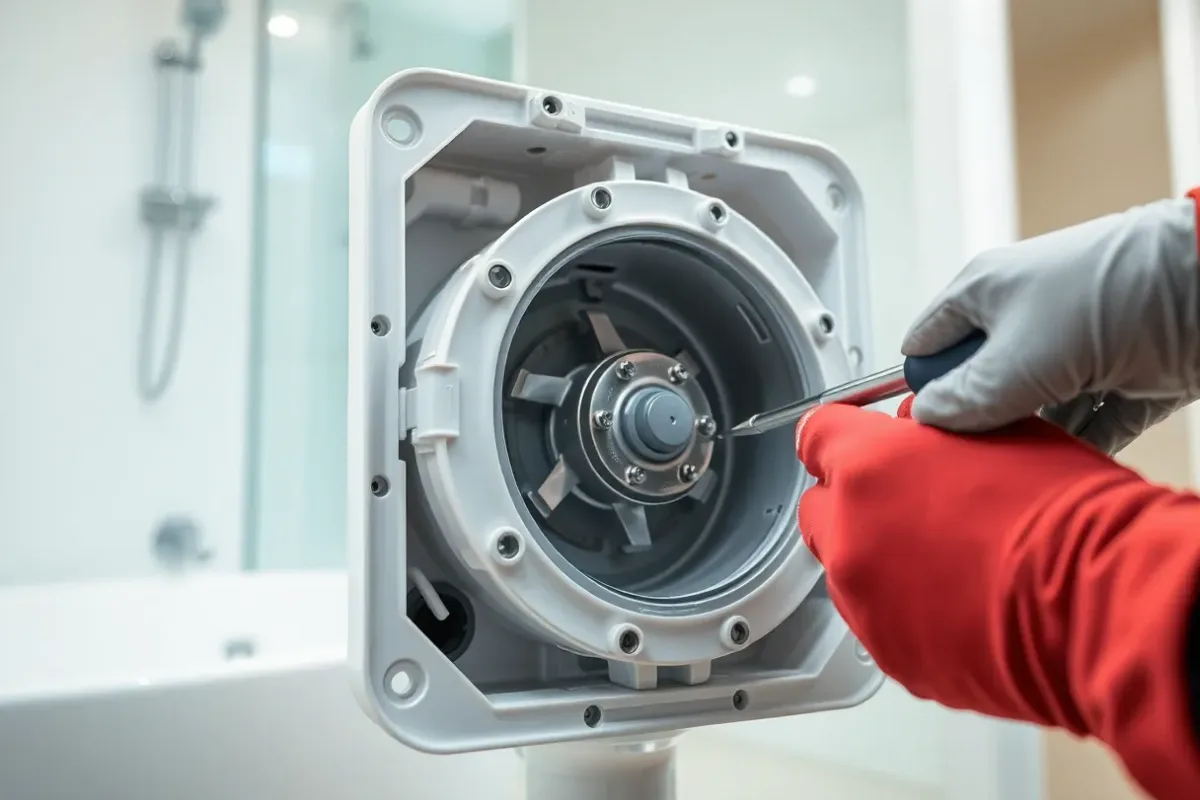
Engineer in gloves repairing the internal cutting blade of a white macerator unit in a Manchester bathroom

A Saniflo is a brand of macerator: a compact pump unit that sits behind or beneath a toilet, basin or shower and lets you add a bathroom, ensuite or utility room where there is no gravity connection to the main soil stack. Inside, a spinning stainless-steel blade grinds waste and toilet paper into a slurry that a motor-driven pump pushes through narrow 22–32mm pipework, lifting it up to around 5 metres vertically before it reaches the soil pipe. A pressure membrane and micro-switch detect water entering the chamber and start the motor, and a non-return valve stops waste flowing back. These units are common across Manchester in basement bathrooms, city-centre flat conversions and loft ensuites where standard drainage was never installed.

Macerators fail for a small number of well-understood reasons. Blockages from wipes, cotton buds, sanitary products, kitchen fats or anything other than human waste and toilet paper are the most common, jamming the blade or clogging the pump. A failed capacitor or seized motor produces a hum with no pumping; a worn micro-switch or perished pressure membrane makes the unit run constantly or cut in and out; limescale build-up on the blade and chamber causes grinding noise and weak flushing; and a worn seal or cracked casing causes leaks. A persistent drain smell usually means the unit needs descaling or the non-return valve has failed. Our engineers diagnose the specific fault before quoting, rather than swapping parts at random.

We repair the full Saniflo range alongside Kinedo, WPM and Grundfos Sololift2 macerators and other SFA-branded units. A repair visit covers fault diagnosis, checks of the capacitor, motor, blade, seal, pressure membrane and micro-switch, blockage clearance, descaling of the chamber and non-return valve, fitting of genuine or compatible parts, and a flush test to confirm normal operation. Many faults are fixed in a single visit; where a unit is near the end of its typical 8–10 year life or the casing is damaged, we explain when replacement is the more economical choice.

How to descale and look after your Saniflo macerator

Descaling a macerator every three to six months keeps the blade, pump and pressure membrane working freely, and is the single best way to avoid weak flushing, grinding noise and smells. You can do it yourself in a few minutes, or we can descale the unit as part of a service.

  1. 1
    Switch off the power

    Isolate the macerator at its fused spur or unplug it before you start, so the motor cannot cut in while the descaler is working.

  2. 2
    Add a macerator-safe descaler

    Pour a proprietary macerator descaler into the toilet bowl, basin or shower that feeds the unit. Avoid strong acids and bleach — ordinary limescale removers can damage the seals and blade.

  3. 3
    Let it dwell

    Leave the descaler to dissolve the limescale for the time stated on the product, usually a couple of hours, so it reaches the chamber, blade and non-return valve.

  4. 4
    Restore power and flush through

    Switch the power back on and run several flushes of clean water to clear the dissolved scale and confirm the unit pumps out cleanly. Repeat every three to six months, more often in hard-water areas.

Saniflo & Macerator Repair — frequently asked questions

Why has my Saniflo stopped working?

The most common causes are blockages from wipes, cotton buds, or sanitary products that should never be flushed through a macerator. Other causes include a worn or split seal, a failed capacitor, or scale build-up on the blade. We diagnose the exact fault before recommending a repair.

Can you repair all macerator brands?

We work on Saniflo, Kinedo, WPM, and most other domestic macerator brands. We carry common replacement parts including seals, blades, and floats. For older or unusual units we can advise on whether repair or replacement is more cost-effective.

How can I prevent my macerator from breaking down?

Only flush human waste and toilet paper — never wipes, cotton buds, sanitary items, or food waste. Descale the unit every three to six months using a macerator-safe descaler. Avoid leaving the unit dormant for long periods without use.

How much does a Saniflo or macerator repair cost?

The cost depends on the fault. A blockage clearance or descale is the simplest and cheapest job, while replacing a part — a capacitor, micro-switch, seal, membrane, blade, or motor — costs more depending on the component and your model. We diagnose the exact fault first, then give a clear fixed quote with no call-out fee, so you know the price before any work starts.

Is it worth repairing my Saniflo or should I replace it?

Most macerator faults — blockages, capacitors, micro-switches, seals, membranes, and blades — are economical to repair. Replacement usually makes more sense when the unit is around eight to ten years old, the motor has burnt out, or the plastic casing is cracked or leaking. We assess the age and condition on site and tell you honestly which option is more cost-effective.

Why does my Saniflo keep running or cut in and out?

A macerator that runs constantly or keeps switching on and off usually has a faulty micro-switch or a perished pressure membrane, which tells the unit there is water in the chamber when there isn't. A leaking non-return valve letting water back into the unit can cause the same symptom. We test the membrane and switch to confirm the cause before repairing.

Get a Free Quote Request a Callback