Drainage in Rochdale
Rochdale sits at the foot of the South Pennines, and its position on the edge of the moors profoundly shapes its drainage environment. The borough regularly records some of the highest rainfall totals in Greater Manchester — its upland catchments feed the River Roch and its tributaries with volumes that put sustained pressure on the drainage network, particularly during the wet autumn and winter months.
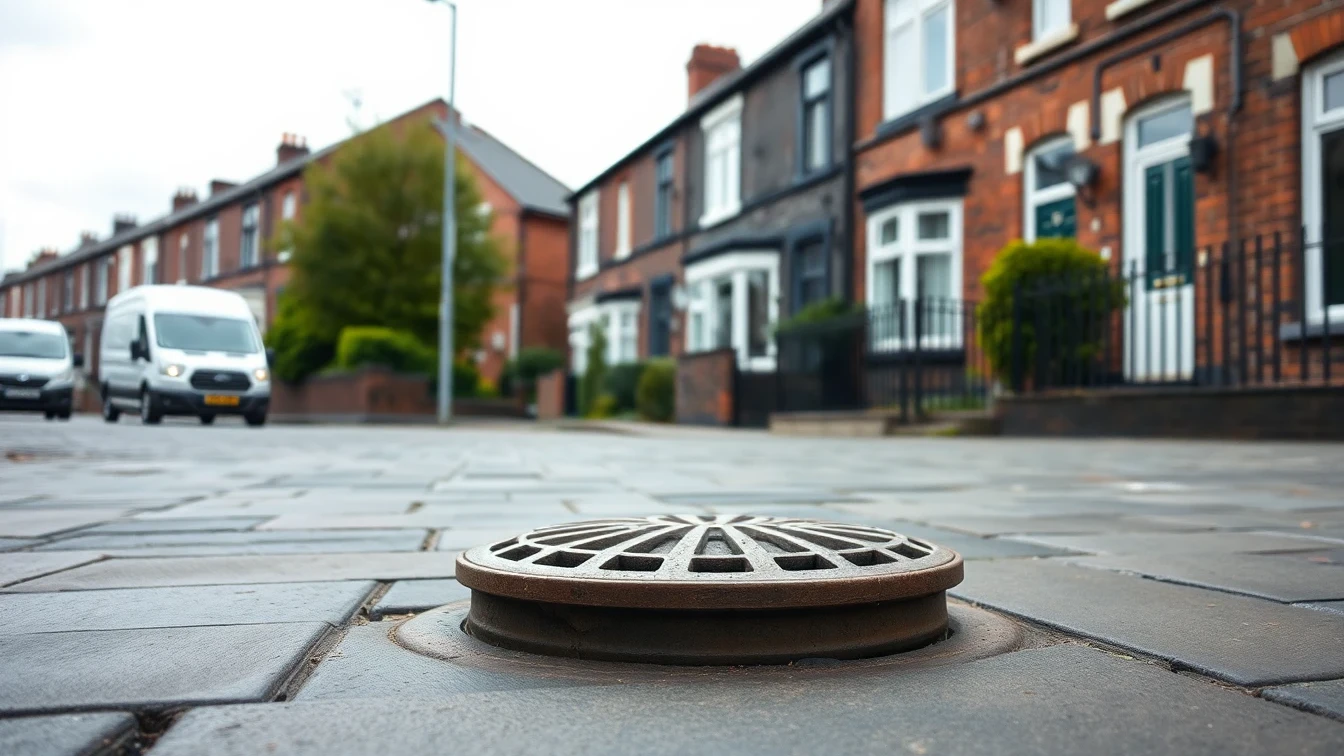
The town's Victorian mill heritage has left a legacy of dense stone-built terraced housing across the town centre and surrounding communities including Milnrow, Castleton, and Norden. These properties, built to house textile workers from the 1850s through the Edwardian era, have clay pipe drainage that is now over a century old. The stone construction and relatively stable Millstone Grit geology of the South Pennine fringe means dramatic ground heave is uncommon, but the combination of pipe age and root pressure from established street trees and gardens creates regular maintenance requirements. The long, continuous terrace rows mean blockages in one property can quickly affect neighbours sharing the same underground run.
The Rochdale Canal — restored and reopened as a navigable waterway — runs through the heart of the town. Properties adjacent to the canal corridor can experience elevated groundwater, particularly during wet periods when canal water levels are managed. Littleborough and Milnrow, both at higher elevations, benefit from excellent natural drainage gradients but also handle significant rainfall volumes draining off the moorland catchments above them. Properties in Littleborough near the moor edge should ensure their gutters, downpipes, and external gullies are kept clear through the autumn leaf-fall period.
Heywood and Middleton, at the southern end of Rochdale borough, have a different character — more post-war and modern housing, closer to the Manchester urban area. Properties from the 1950s through the 1970s in these communities may contain pitch fibre pipes that are now approaching or past their design lifespan, and clay drainage from this era is showing its age with increasing joint deterioration.
The combination of high Pennine rainfall, Victorian stone terraces with clay drainage, canal-influenced groundwater, and the sharp elevation changes across the borough creates drainage challenges that are genuinely distinctive to Rochdale and its surrounding communities.